

Here’s a list of the highest cost of living cities in the world:
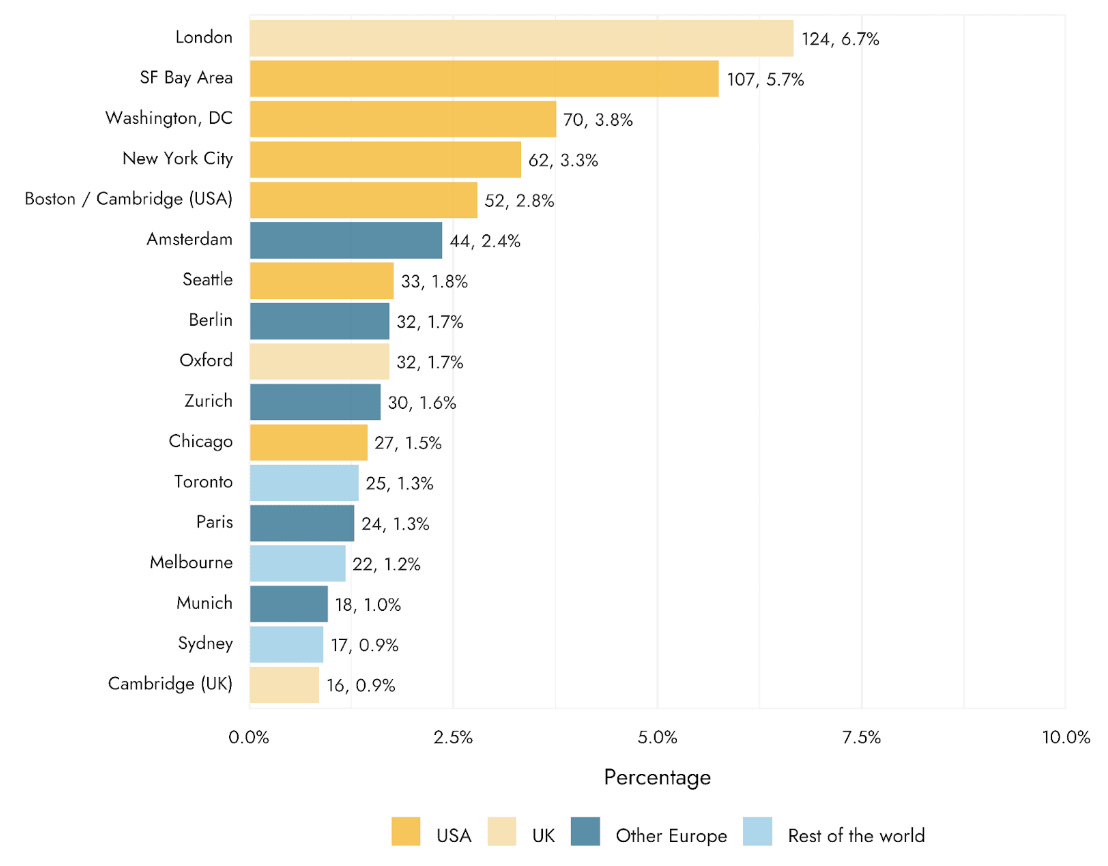
Oh, whoops. That’s actually the data on where the 2024 EA survey respondents live.
The highest cost of living cities is actually this one:
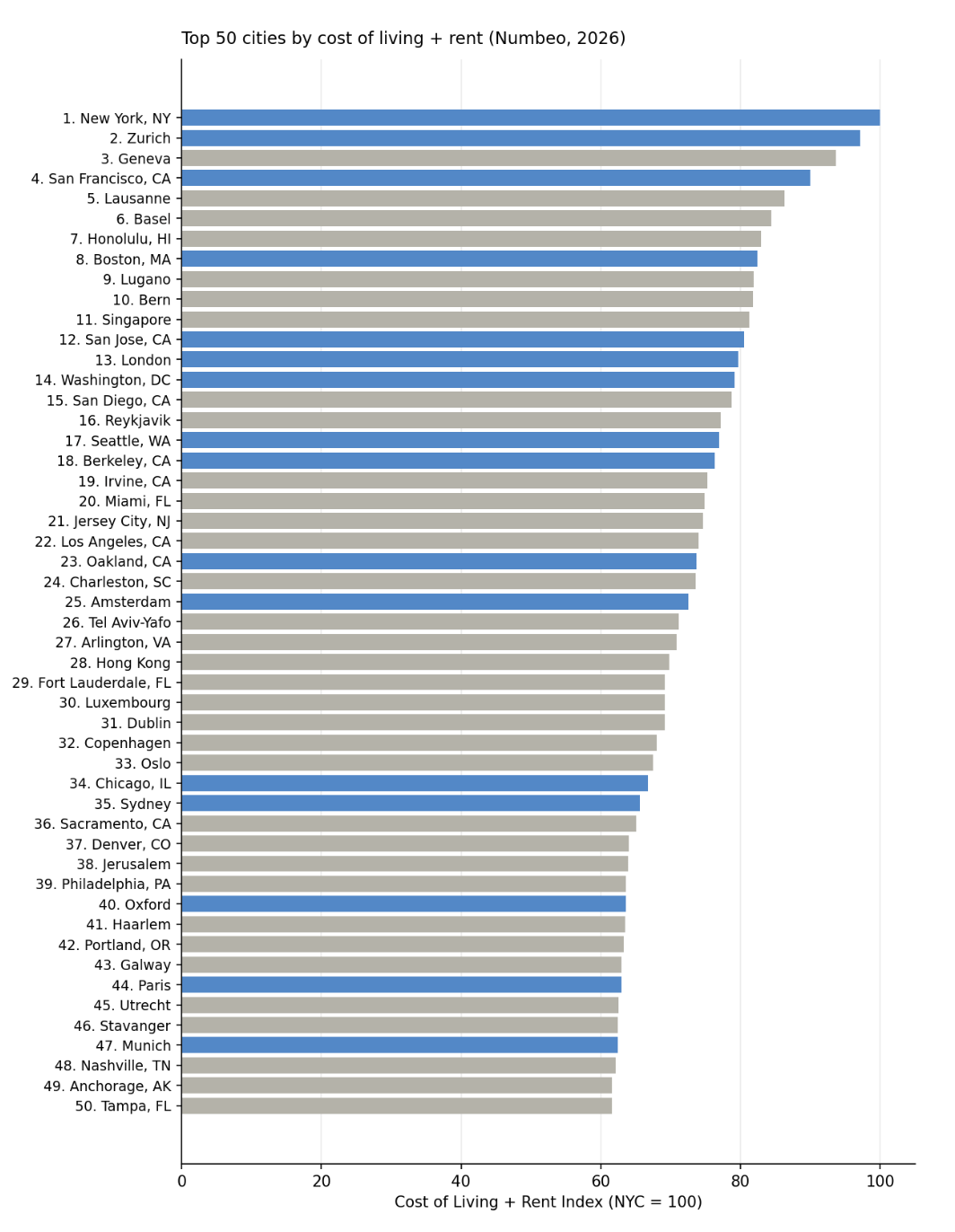
One could be forgiven for mixing these up — the overlap is pretty intense.
The only top EA hub locations that aren’t in the top 50 most expensive cities in the world are Cambridge (#52), Melbourne (#79), and Berlin (#101).
If your intuitions aren’t built for the absolutely insane prices of these cities, you might want to change your orientation to spending.
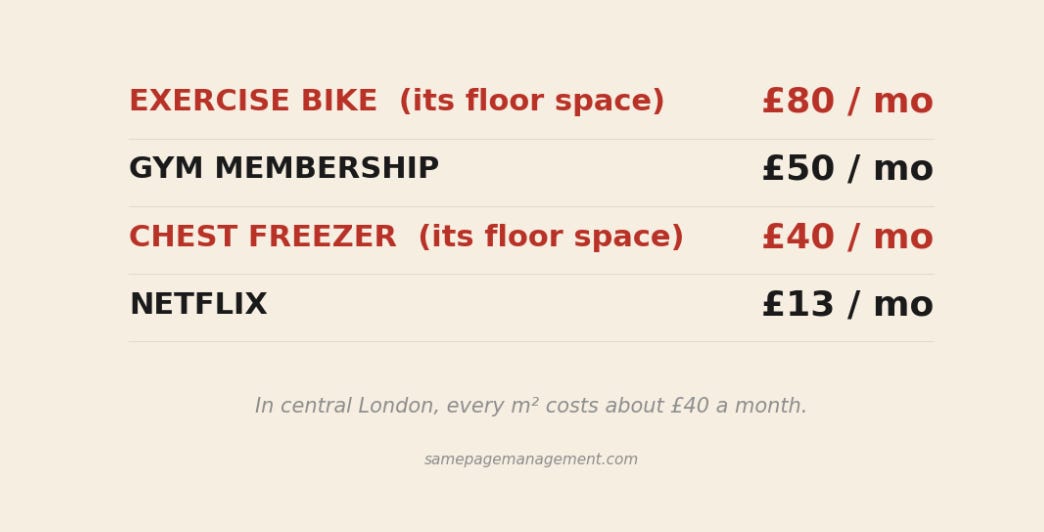
In central London, a square metre of floor space costs around £500 a year — about £40 a month. In Berkeley it’s about $580/m² (~$54 per square foot).
This means the space cost of a chest freezer is ~£40/month, and an exercise bike setup is ~£80/month.
I suggest the following heuristic:
Spend liberally to buy comfort per unit area.
Here’s some of how I follow through on that heuristic:
Buy storage. Including setups that are pleasant to interact with.
Use vertical space. Our IKEA BESTÅ system stacks to the ceiling.
Avoid bulk buying. Buying extra for convenience is fine. Buying extra for lower cost is false economy. Chest freezers rarely make sense.
Reduce clutter. Clutter gives me a sense of low space, or claustrophobia or something like that. I like having strong cable management, and I avoid storage I can see directly into.
Multipurpose furniture. Beds with storage space underneath. Storage ottomans. Extendable tables. Sofa beds.
Generally resist owning things, and make peace with getting rid of them. Amazon delivers quickly in these cities.
Exercise machines are very ‘expensive’. For me, that makes it a no brainer to go to a gym instead.
Space efficient appliances. My colleagues like these fans, which are expensive but much smaller.
Remind myself how ‘expensive’ space-intense setups are. I like having my electric piano out, but most of the time it’s not worth ‘paying’ £30 of space cost per month for it.
Taking this seriously helped me live comfortably in an 80 sq ft room for ~6 years. That probably saved me around £400 a month relative to the place I was likely to move into next.
Footnote: it feels a bit bananas to start with a joke surfacing a real issue (EA’s concentration in expensive cities) and then talk only about how to individually cope. The obvious systemic fix would be for funders to encourage orgs towards lower-CoL hubs — coworking spaces in Houston, Prague, Thailand, Indian cities, or building places to live like CEEALAR in Blackpool. They could discourage location-based salary policies: instead, pay a single global rate and allow remote employees to live wherever is best for them (within org constraints). But I think that push would actually be a mistake. It matters a great deal that bio people can be in Boston, policy people can be in DC and London, and that people working on AI can be in San Francisco. At the moment, the right approach is to subsidise the cost of living in those places, not relocate the people doing the work.